How to Manage a Retention Pond on Your Property in South Carolina and North Carolina
Whether your property has a farm pond, a stormwater retention basin, or a decorative lake, that water feature is either an asset or a liability — depending on how well it's maintained.
A well-managed pond improves drainage, supports wildlife, adds property value, and meets regulatory requirements. A neglected pond silts in, develops algae and aquatic weed problems, erodes its banks, and — for commercial properties — can trigger compliance violations.
This guide covers what retention pond management actually involves, what problems to watch for, and when DIY maintenance ends and professional help begins.
What Retention Pond Management Includes
A complete pond management program addresses five key areas:
1. Water Quality Monitoring
Healthy ponds have balanced water chemistry — proper pH, dissolved oxygen levels, and nutrient balance. When chemistry goes wrong, algae and aquatic weeds explode, fish die, and the pond becomes visually and functionally degraded. Regular water quality testing lets you catch problems early, before they become expensive to fix.
2. Aquatic Weed and Algae Control
Algae blooms and invasive aquatic weeds are the most visible pond management problem. Left unchecked, they choke out native plants, deplete oxygen, and create foul odors and appearance. Management options include beneficial aeration, biological controls, aquatic herbicide treatments, and mechanical removal — the right approach depends on the species, severity, and pond use.
3. Shoreline Management
The shoreline is where pond maintenance meets land management. Erosion along pond banks is a common problem — rain runoff, wave action, and foot or equipment traffic all eat at unprotected banks. Management includes establishing appropriate vegetation buffer zones, installing erosion control materials on vulnerable banks, and removing invasive shoreline plants that destabilize soil.
4. Aeration
Aeration keeps water circulating and oxygenated — which suppresses algae, supports fish populations, and improves water clarity. Surface aerators, subsurface diffusers, and fountain systems are all options depending on pond depth and size. Aeration systems require regular inspection and maintenance to stay effective.
5. Sediment Management
All ponds accumulate sediment over time as runoff carries soil particles into the water. When sediment buildup reduces pond depth significantly, the pond loses storage capacity, water quality declines, and aquatic habitat degrades. Addressing sediment means either dredging (expensive but thorough) or managing upstream erosion to slow the accumulation rate.
Signs Your Pond Needs Attention
- Green or blue-green water — algae bloom in progress
- Excessive aquatic weed growth covering more than 20–30% of the surface
- Fish kills or visible dead fish
- Foul odor — sulfur or rotten-egg smell indicates oxygen depletion
- Visibly eroding banks or muddy water after rain
- Water level that doesn't recover after dry periods — may indicate dam or outlet issue
- Sediment delta visible at inlet points — accelerating siltation
Commercial Property Retention Ponds: Compliance Matters
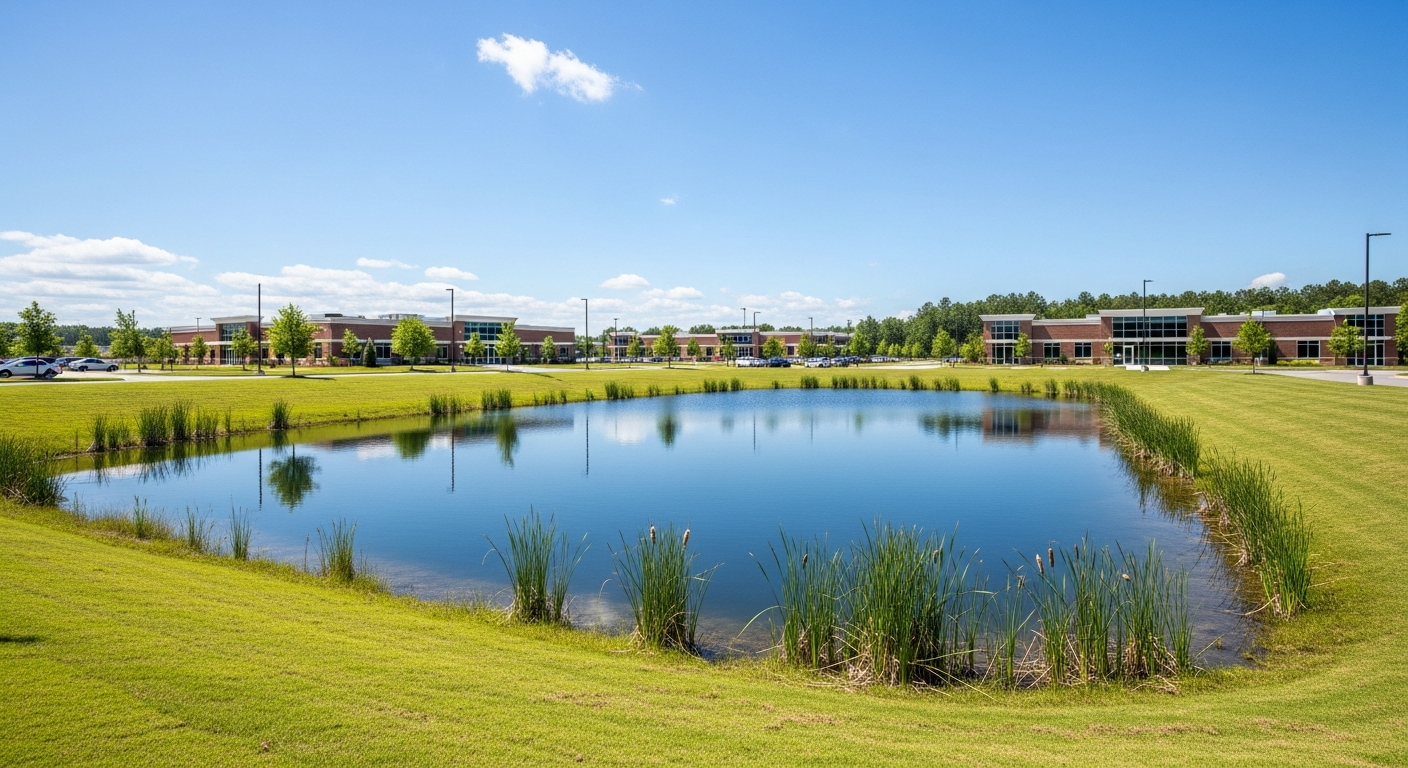
If your property has a stormwater retention or detention pond, it may be subject to local or state maintenance requirements. Many municipalities in South Carolina and North Carolina require documented pond maintenance records as part of stormwater management permits. Failing to maintain these ponds can result in notices of violation and fines.
P1 Land & Property Management provides documented maintenance programs for commercial retention ponds — keeping your system functioning and your compliance records current.
When to Call a Professional
DIY pond maintenance has limits. If you're dealing with a serious algae problem, significant erosion, dam integrity concerns, or a commercial pond with regulatory implications, a professional pond management contractor has the equipment, chemicals, and expertise to solve the problem correctly.
P1 provides pond and waterway management throughout Upstate South Carolina and the Charlotte, NC region. We work with farm ponds, commercial retention basins, residential estate ponds, and waterfront properties.
Call +1 (704) 221-8928 or request a free estimate online — P1 Land & Property Management, serving Upstate SC and Charlotte NC.